
Wondering how much your next taxi ride will cost in 2026? Don’t get caught off guard—know before you go.
This handbook is your definitive resource for understanding and getting a reliable taxi fare estimate in the UK for 2026. Taxi costs are rising and unpredictability can impact anyone’s travel plans.
Here, you’ll find clear explanations on how fares are calculated, what factors affect pricing, regional differences, and practical tips to save money. Explore modern fare calculators and future trends to plan your journeys with confidence.
Use this guide to take control of your travel budget and avoid expensive surprises.
How Taxi Fares Are Calculated in the UK
Understanding how your taxi fare estimate is determined can help you avoid surprises and plan your journeys with confidence. The calculation process combines several core elements, including distance, time, local regulations, and extra fees. Let’s break down the key components so you know exactly what to expect before stepping into a cab.
The Core Components of a Taxi Fare
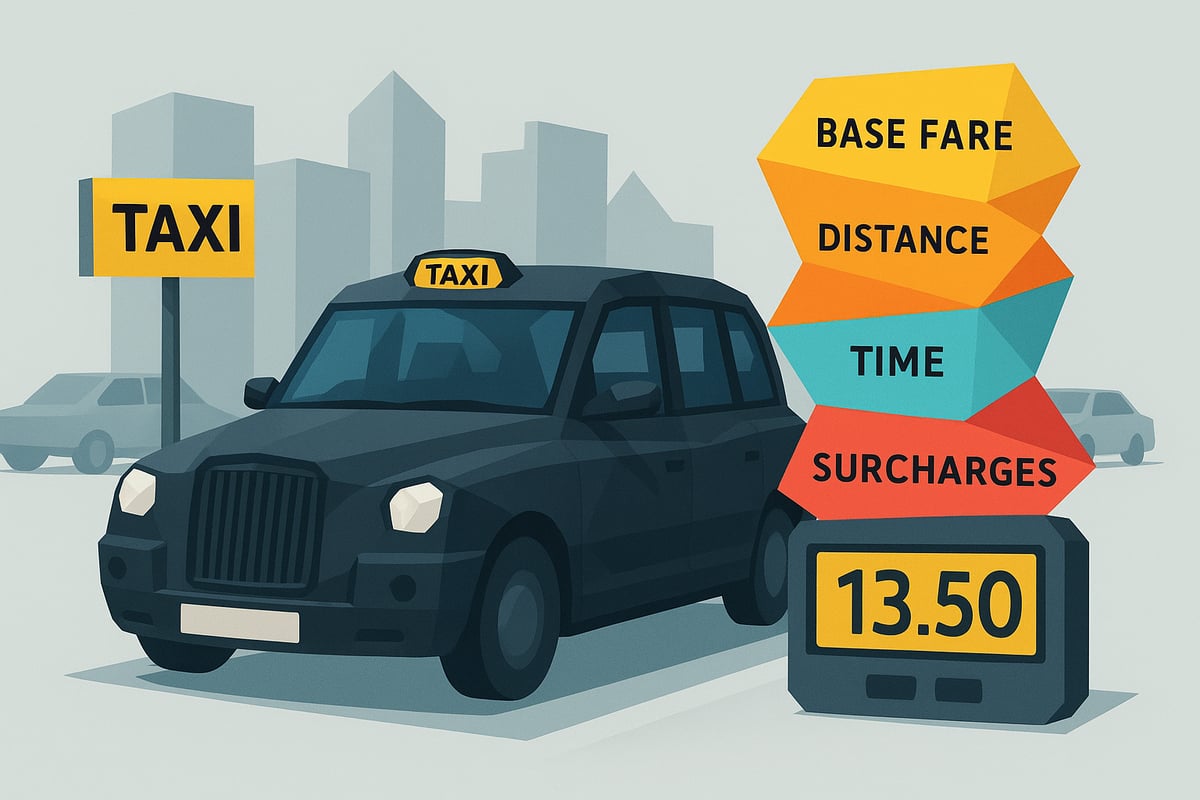
Every taxi fare estimate in the UK starts with a base fare, often called the flag fall, which is applied as soon as you enter the vehicle. From there, the meter adds charges based on the distance travelled, typically calculated per mile or kilometre. For example, London rates may differ from those in regional towns, reflecting local demand and cost structures.
Time-based charges are also included, especially if your journey involves waiting in traffic or slow-moving conditions. Additional surcharges can apply for night-time trips, public holidays, or airport pick-ups, pushing the total higher. The type of vehicle you select, such as a standard saloon, executive car, or multi-seater, can also affect the final amount.
Local authorities play a crucial role, as councils regularly review and set fare structures to ensure transparency and fairness. To illustrate, a city centre to airport journey might include a base fare, distance charge, waiting time, and an airport premium, all contributing to your overall taxi fare estimate.
Regional Variations in Taxi Fare Calculation
Taxi fare calculations are far from uniform across the UK. London, for instance, is regulated by Transport for London (TfL), which sets its own tariff structure. In contrast, cities like Manchester, Birmingham, and Glasgow follow their respective local authority rules. This means a journey of the same length can result in a different taxi fare estimate depending on location.
Urban areas tend to have lower per-mile rates but may include more surcharges. Rural journeys, on the other hand, often feature higher rates due to longer distances and less competition. Airport transfers frequently involve fixed-rate options or additional fees for drop-off and pick-up.
A helpful resource for comparing projected rates and understanding city-by-city differences is the Taxi Price Per Mile UK 2025: Updated Rates & Insights, which provides detailed data and examples. For instance, a trip from Heathrow to Central London is typically more expensive than the same distance elsewhere due to higher base rates and airport surcharges.
Factors That Influence Your Final Fare
Several variables beyond base rates can impact your taxi fare estimate. Traffic congestion and route selection make a noticeable difference, as detours or delays result in higher time-based charges. The booking method you choose—whether via app, phone, or street hail—may also affect the price, with some platforms offering fixed fares or discounts.
Additional fees can apply for extra passengers, large amounts of luggage, or accessible vehicles. Events, holidays, and peak times often trigger price spikes, especially in busy cities. For example, during New Year’s Eve in London, surge pricing can cause fares to increase significantly, making it essential to factor these scenarios into your travel planning.
The Role of Taxi Fare Calculators in 2026
Modern taxi fare calculators have become indispensable tools for UK travellers. These online platforms and mobile apps generate instant taxi fare estimates by analysing your journey details—such as pick-up, drop-off, time of day, and vehicle type. Algorithms use up-to-date tariff data to provide a close approximation of the actual fare you will pay.
Many booking apps now integrate these calculators, offering upfront pricing and the convenience of comparing providers. However, it is important to remember that calculators cannot always predict unexpected traffic, route changes, or last-minute surcharges. For example, estimating a late-night airport run gives you a solid starting point, but the final total may still vary slightly from your initial taxi fare estimate.
Understanding Metered vs Fixed Fares
When requesting a taxi fare estimate, it is vital to understand whether your journey will be metered or fixed fare. Metered journeys use a taximeter to calculate the cost based on real-time distance and time, which is common for city trips and short journeys.
Fixed fares, on the other hand, are pre-agreed prices for specific routes, such as airport transfers or long-distance rides. The advantage of a fixed fare is price certainty, especially for high-traffic routes like Central London to Heathrow. The downside is that you may pay more than the metered rate if traffic is unusually light.
Ultimately, knowing the difference allows you to choose the best option for your situation and ensures your taxi fare estimate reflects the true cost of your journey.
Step-by-Step Guide: Getting a Taxi Fare Estimate in 2026
Planning a journey in 2026? Getting an accurate taxi fare estimate is essential for budgeting and avoiding surprises. This guide walks you through each step, ensuring you know exactly what to expect before you book.
Step 1: Identify Your Journey Details
Start by pinpointing your pick-up and drop-off locations. Enter exact addresses or well-known landmarks for the most accurate taxi fare estimate. Consider alternative routes that might be faster or less congested, especially if your destination is in a busy area.
Note the time of your journey. Fares can change depending on whether you travel during the day or night, or on weekends and holidays. Think about how many people are travelling and if you have extra luggage, as these factors can affect your taxi fare estimate.
For example, if you are heading from the city centre to a suburban hotel with a group and multiple suitcases, be sure to specify this when requesting your estimate.
Step 2: Choose Your Vehicle Type
Selecting the right vehicle is crucial for an accurate taxi fare estimate. The type of car impacts the base fare, per-mile rate, and any additional fees. Consider the following options:
| Vehicle Type | Suitable For | Impact on Fare |
|---|---|---|
| Standard Saloon | 1-4 passengers | Standard fare |
| Executive Car | Business travellers | Higher fare |
| Multi-seater/Minivan | Groups, luggage | Higher fare |
| Accessible Vehicle | Wheelchair users | May include surcharge |
If you are a solo traveller, a standard car may suffice. Groups of five or more, or those with bulky luggage, might need a multi-seater, which increases the taxi fare estimate. Accessibility requirements can also lead to specific vehicle selection and possible surcharges.
Step 3: Select Your Booking Method
How you book your taxi can influence your taxi fare estimate. Common methods include:
- App-based bookings
- Phone reservations
- Online forms
- Street hails
App bookings often provide instant quotes and may include exclusive promotions or loyalty discounts. Phone and online bookings are convenient for advance reservations, while street hails might be less predictable in price.
For instance, booking via an app during a special promotion can help reduce your taxi fare estimate, making it a cost-effective choice for frequent travellers.
Step 4: Use a Trusted Taxi Fare Calculator
Input your journey details into a reputable UK taxi fare calculator. These tools require your pick-up location, destination, time, passenger count, and luggage information. Review the breakdown of your taxi fare estimate, including base fare, distance, time, and any surcharges.
Compare estimates from several providers for the best rate. Many apps, such as those discussed in the Capital Cars Updated Booking App, offer real-time fare quotes and allow you to see upfront pricing before you commit.
For example, comparing estimates from three Edinburgh companies for a late-night airport trip can reveal significant savings and help you make an informed decision.
Step 5: Confirm Fare and Book Your Taxi
Once you have your taxi fare estimate, check if the pricing is fixed or variable. Upfront pricing guarantees the fare, while metered journeys may change due to traffic or detours. Always review for hidden fees, such as airport, luggage, or late-night surcharges.
Save or print your fare estimate for reference. If possible, secure a fixed fare for peace of mind, especially for airport drop-offs. This final step ensures you travel with confidence, knowing your costs before the journey begins.
Key Factors That Affect Taxi Fare Estimates
Understanding what shapes your taxi fare estimate in 2026 is essential for budget planning. Several variables can influence the final price you pay for any journey across the UK. By considering the following key factors, you can anticipate costs and avoid surprises.
Distance and Route Planning
The distance you travel remains the foundation of any taxi fare estimate. Short hops across a city centre cost less, while long-distance trips—such as from Central London to Gatwick—add up quickly due to per-mile charges.
Route selection also plays a role. Opting for a direct route usually lowers your fare, but scenic or alternate routes can increase both distance and cost. Detours for roadworks or diversions may further affect your taxi fare estimate, especially if the meter continues running during delays.
For example, a journey from Central London to Heathrow may be more cost-effective than a longer ride to Gatwick, even if both start from similar locations. Always review possible routes and discuss options with your driver to ensure the best value.
Time of Day, Week, and Year
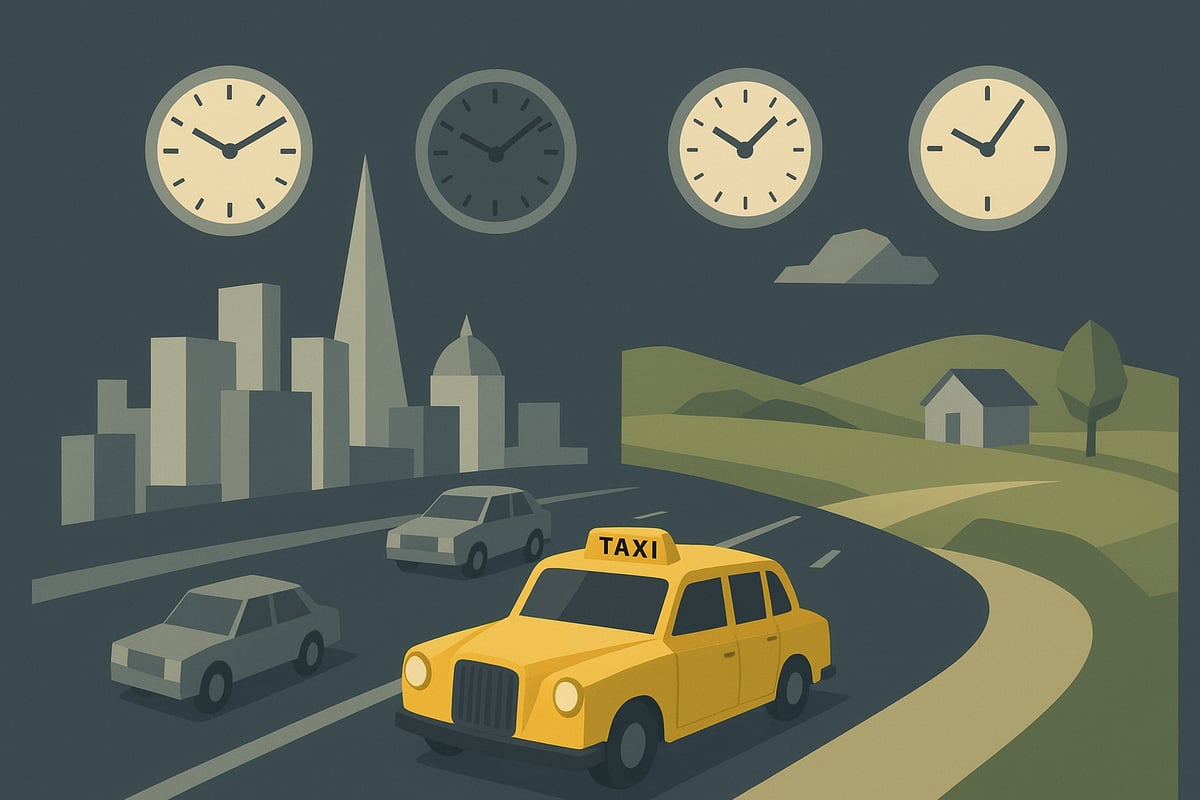
When you travel is nearly as important as where you travel. Peak periods such as rush hour, weekends, and public holidays can trigger higher rates. Night surcharges or early morning fees are common in most UK cities and are clearly reflected in your taxi fare estimate.
For instance, a midday ride tends to be cheaper than one at midnight, when night tariffs apply. Special events or holidays may introduce temporary premiums, so it pays to plan your journey timing with care and check fare schedules in advance.
Traffic Conditions and Waiting Time
Traffic congestion is an unpredictable variable that can significantly affect your taxi fare estimate. Journeys through busy zones, especially in central areas or near major attractions, often accumulate waiting time charges as the meter continues during slow movement or stops.
Roadworks, large events, and traffic accidents can further increase costs. For example, a ride during London rush hour may see your fare climb due to extended delays, while the same journey off-peak could be far more economical. Always consider current traffic conditions before setting off.
Vehicle Type and Special Requirements
The type of vehicle you select will impact your taxi fare estimate. Executive cars and minivans command higher rates than standard saloons, reflecting added comfort or extra passenger capacity.
Special requirements such as wheelchair accessibility, space for pets, or carrying bikes may introduce additional charges. Booking a wheelchair-accessible taxi for a group, for example, often results in a slightly higher fare due to the need for specialised vehicles and equipment.
Booking Channel and Advance Reservations
How you book your journey can influence your taxi fare estimate. App-based bookings, telephone reservations, online forms, or traditional street hails may all feature different pricing structures, convenience levels, and access to discounts.
Advance reservations sometimes offer fixed rates or discounts, especially for airport transfers or longer trips. Using comparison tools and loyalty programmes can help you find the best deal. For more tips on affordable fares and what to watch out for, see this guide on Cheap Taxi Services in Edinburgh.
Local Authority Regulations and Provider Policies
Local councils across the UK regulate taxi fare structures, setting maximum tariffs and approving fare updates. These rules ensure consistency but also mean that rates can vary between cities or regions.
Providers may add their own surcharges for things like airport pickups, extra luggage, or premium services. For instance, Transport for London updates its tariffs regularly, while Scottish councils may set different rates. Always check the latest local fare policies when calculating your taxi fare estimate, as these can have a notable impact on your final price.
Regional Guide: Taxi Fare Estimates Across the UK
Understanding how a taxi fare estimate can vary across the UK is essential for budgeting your journeys in 2026. Each region has its own pricing system, regulated by local authorities or transport bodies, and these differences can significantly affect your final fare. Let us explore the main regions, so you know what to expect wherever you travel.

London
London’s taxi fare estimate system is regulated by Transport for London (TfL), ensuring consistency for black cabs and licensed minicabs. As of 2025, black cabs charge a minimum flag fall, followed by distance and time-based rates. The city’s average per-mile rate is typically higher than other UK cities, influenced by heavy traffic and premium licensing costs.
For example, a central London to Heathrow journey can range from £50 to £70, depending on traffic and time of day. Black cabs offer metered pricing, while minicabs may provide fixed rates for common airport transfers. Recent fare increases, such as the proposed 7.5% rise in 2025, reflect efforts to retain drivers and manage rising costs. Always check the latest taxi fare estimate before booking, as fares are subject to annual review.
Edinburgh
Edinburgh’s taxi fare estimate system is set by the city council, with both black cabs and private hire vehicles operating under strict regulations. Base fares start lower than in London, but per-mile charges vary, especially for late-night or holiday journeys. Private hire companies, like Capital Cars, offer transparent pricing and discounts for advance bookings.
A typical ride from the city centre to the airport is between £25 and £38, with fixed fare options providing cost certainty. For detailed fare breakdowns and booking guidance, see the Taxi from Edinburgh Airport to City Centre page. Festival periods may include surcharges, so always confirm your taxi fare estimate before travelling, particularly during peak tourism months.
Manchester, Birmingham, and Glasgow
In Manchester, Birmingham, and Glasgow, local authorities set the taxi fare estimate framework for both hackney carriages and private hire vehicles. Each city has its own base fare, mileage rate, and waiting time charges. For example, Manchester’s city centre to airport journey usually costs between £20 and £35, while Birmingham and Glasgow offer similar pricing for comparable distances.
| City | Base Fare | Per-Mile Rate | Example Airport Fare |
|---|---|---|---|
| Manchester | £3.00 | £1.80 | £25 (to Airport) |
| Birmingham | £2.80 | £1.75 | £28 (to Airport) |
| Glasgow | £3.20 | £1.90 | £30 (to Airport) |
It is wise to compare providers and check your taxi fare estimate in advance, as prices can fluctuate during events or busy periods.
Airport Transfers: Major UK Airports
Airport transfers across the UK, including Heathrow, Gatwick, Stansted, Manchester, and Edinburgh, often feature fixed pricing for popular routes. These fixed fares help travellers avoid surprises, especially when dealing with heavy luggage or late-night arrivals. Surcharges may apply for airport pick-up and drop-off, parking, or waiting time.
For instance, a taxi fare estimate from Manchester Airport to Leeds typically ranges from £85 to £110, depending on traffic and vehicle type. Always check if your chosen provider offers a fixed rate, as this can be more cost-effective than metered journeys during peak times.
Rural and Suburban Journeys
Outside major cities, the taxi fare estimate is influenced by longer distances, lower passenger demand, and limited availability. While per-mile rates are often higher in rural areas, there tend to be fewer surcharges compared to urban centres. Advance booking is recommended, as rural providers may require more notice and offer fewer fixed-fare options.
A typical journey from suburban Edinburgh to St Andrews might cost £80 to £120, depending on time of day and route. Always request a taxi fare estimate upfront, and consider comparing several local providers to find the best value.
Using Taxi Fare Calculators: Tools, Tips & Limitations
Navigating the world of taxi fare estimate tools in 2026 is crucial for anyone wanting transparency in travel costs. Digital calculators and mobile apps have become essential, but understanding their strengths and limitations is key to avoiding surprises. This section explores how to make the most of these tools, highlighting best practices, common errors, and future trends in fare estimation.
Top Taxi Fare Calculators in the UK
Choosing the right tool for your taxi fare estimate can make a significant difference in budgeting and planning. The UK market offers a range of online calculators and mobile apps, each with distinct features. Some calculate fares based on real-time traffic, while others provide options for route selection and vehicle type.
| Calculator/App | Key Features | User Experience | Coverage |
|---|---|---|---|
| Taxi Meter UK | Real-time tariffs, route options, vehicle selection | Intuitive interface, quick results | Major UK cities |
| Capital Cars Scotland | Local fares, airport quotes, loyalty discounts | Seamless booking, transparent pricing | Edinburgh & surrounds |
| Cab Compare | Provider comparison, upfront pricing | Easy-to-read results, multi-provider | Nationwide |
For those seeking a mobile-first option, the Taxi Meter UK – Cab Fares App is a standout, offering quick taxi fare estimate results for major cities. When comparing calculators, check if they reflect current tariffs and include all relevant surcharges.
How to Get the Most Accurate Estimate
Securing an accurate taxi fare estimate requires more than just typing in your start and end points. Always double-check journey details, including pick-up time, day of week, and any special requirements like extra luggage or accessibility. Surcharges for airport runs, late nights, or holidays can alter the final figure.
To improve accuracy:
- Enter precise addresses, not just postcodes.
- Choose the correct vehicle type for your group size.
- Compare estimates across at least two providers.
- Factor in potential waiting times or route changes.
For airport journeys, reviewing resources like the Pre-Book Airport Taxi Guide helps clarify what is included in your taxi fare estimate, especially for fixed fares. Comparing multiple estimates ensures you avoid unexpected costs.
Common Pitfalls and How to Avoid Them
Many travellers rely on a taxi fare estimate only to find the real fare is higher. This often happens due to overlooked surcharges, outdated tariff tables, or failure to check for peak time premiums. For example, during the Edinburgh Festival, traffic and demand can inflate prices beyond the initial estimate.
To avoid common mistakes:
- Always ask if waiting time is included.
- Check if your calculator uses the latest fare updates.
- Be aware of local events that may trigger surge pricing.
A little research before you book can prevent unwelcome surprises and ensure your taxi fare estimate is as close to reality as possible.
When to Trust the Estimate—and When to Ask for a Quote
While most taxi fare estimate tools offer reliable figures for standard journeys, their accuracy drops with complex routes, heavy traffic, or special events. Algorithms can only predict so much, and real-world conditions may shift quickly.
If you are planning a group booking, a trip during a major event, or need special vehicle requirements, it is wise to call or email providers for a firm quote. For example, a fixed airport transfer during a bank holiday is best confirmed in advance rather than relying solely on an online taxi fare estimate.
Future Trends: AI and Dynamic Pricing in 2026
Looking ahead, taxi fare estimate accuracy will improve as AI and big data are integrated into calculators. Dynamic pricing models will adjust fares in real time, reflecting demand, weather, and traffic conditions for greater transparency.
Innovations in taxi fare estimate tools will make budgeting easier, but travellers should remain vigilant. Stay informed about changes and always compare estimates to keep control of your journey costs.
Top Tips for Saving Money on Taxi Fares in 2026
Looking to keep your travel budget in check? Whether you are a frequent commuter or an occasional traveller, these expert tips will help you get the most accurate taxi fare estimate and avoid unnecessary costs in 2026.
Book in Advance and Compare Providers
Securing your ride in advance is one of the most effective ways to lock in a favourable taxi fare estimate. Many providers offer advance booking discounts or fixed rates, especially for airport transfers and long-distance journeys.
Use comparison tools to check multiple providers before booking. This allows you to spot the best rates for your route and travel time. With over 300,000 licensed taxis and private hire vehicles in England alone, the options are vast. For more insights on taxi availability and fare trends, see the Taxi and private hire vehicle statistics, England: 2024 (revised).
- Book early for lower rates
- Use online comparison sites
- Confirm fixed fares for key routes
Booking ahead ensures you get a transparent price and peace of mind.
Choose the Right Vehicle and Journey Type
The type of taxi you choose can significantly impact your taxi fare estimate. Standard cars are usually more cost-effective for solo travellers or small groups, while executive or larger multi-seater vehicles incur higher charges.
If you are travelling with friends, consider sharing a ride to split the cost. For events or festivals, group bookings often come with dedicated rates. Always specify your passenger count and luggage needs to avoid last-minute surcharges.
- Standard vehicles for everyday trips
- Multi-seaters for groups and luggage
- Avoid unnecessary upgrades
Selecting the right vehicle for your journey helps you save without sacrificing comfort.
Leverage Apps, Loyalty Programmes, and Promotions
Mobile apps have revolutionised the way we book taxis. Many apps now provide an instant taxi fare estimate, upfront pricing, and exclusive promotions for users. Signing up for loyalty programmes can also help you accumulate points for future discounts.
Look out for seasonal sales, referral codes, or app-exclusive deals that can reduce your fare. Comparing promotions across different apps may uncover substantial savings, especially for repeat journeys.
- Download multiple apps for better deals
- Register for loyalty schemes
- Use promo codes at checkout
Maximise these offers to make every ride more affordable.
Avoid Peak Times and High-Demand Events
Timing is everything when it comes to securing the best taxi fare estimate. Fares typically surge during peak hours, weekends, holidays, and special events. For example, London has seen fare increases ahead of major events, with taxi fares set to rise by two-and-a-half times inflation in 2025.
Plan your travel outside of busy times when possible. If your schedule is flexible, a midday ride can be much cheaper than a late-night or event-time journey.
- Check local event calendars
- Travel during off-peak hours
- Avoid booking during major holidays
Strategic timing can make a noticeable difference to your overall costs.
Understand Surcharges and Hidden Fees
Before confirming your booking, always review the terms for any additional charges. Common surcharges include airport fees, extra luggage, late-night travel, and even waiting time. These can quickly add up and affect your final taxi fare estimate.
Ask your provider for a breakdown of all potential fees. Some companies display these transparently, while others may only disclose them upon request. Being informed prevents unwelcome surprises at your journey’s end.
- Review surcharge tables
- Ask for a full cost breakdown
- Keep records of your fare estimates
Understanding the full pricing structure is key to avoiding unexpected costs.
Now that you have a clearer understanding of how taxi fares are calculated, what affects your final cost, and how to make the most of fare calculators, you’re ready to plan your journeys with confidence in 2026. Whether you’re heading across Edinburgh or catching an early flight, it makes all the difference to have accurate, transparent fare information before you travel. If you’d like a tailored quote or want to secure a ride that fits your needs, you can Click to contact / book and get started in just a few simple steps.