
Every traveller heading to Edinburgh Airport or planning a local event soon realises that finding an accurate taxi quote is not as simple as it seems. The process can be confusing, as fares are influenced by unpredictable traffic, route choices, and even time of day. Understanding a taxi quote means unravelling a mix of pricing elements, not just distance, so getting the best deal involves more than just looking at a number. This quick guide helps you decode what actually drives taxi pricing, helping you secure the most reliable and cost-effective ride for your next journey.
Table of Contents
- Defining A Taxi Quote And Common Misconceptions
- How Taxi Quotes Are Calculated
- Fixed Fares Vs Metered Pricing Explained
- Booking Methods: Online, Apps, And Calls
- Cost Factors And What Affects Your Quote
- Risks, Pitfalls, And How To Avoid Surprises
Key Takeaways
| Point | Details |
|---|---|
| Understanding Fare Structures | Taxi quotes involve several elements such as base fare, distance rate, and surcharges, impacting the final fare. Passengers should be aware that prices can fluctuate based on various factors like traffic and local regulations. |
| Fixed vs Metered Pricing | Fixed fares provide certainty in pricing, while metered pricing varies based on real-time conditions. Choosing the right model depends on the journey’s nature and the desire for predictability. |
| Booking Methods | Multiple booking options are available, including phone calls, websites, and mobile apps. Passengers should choose a method that aligns with their comfort and needs for convenience. |
| Mitigating Risks | It is crucial for passengers to request a detailed fare estimate and understand pricing structures before the journey to avoid unexpected costs. Proactive communication and research can reduce service-related risks. |
Defining a Taxi Quote and Common Misconceptions
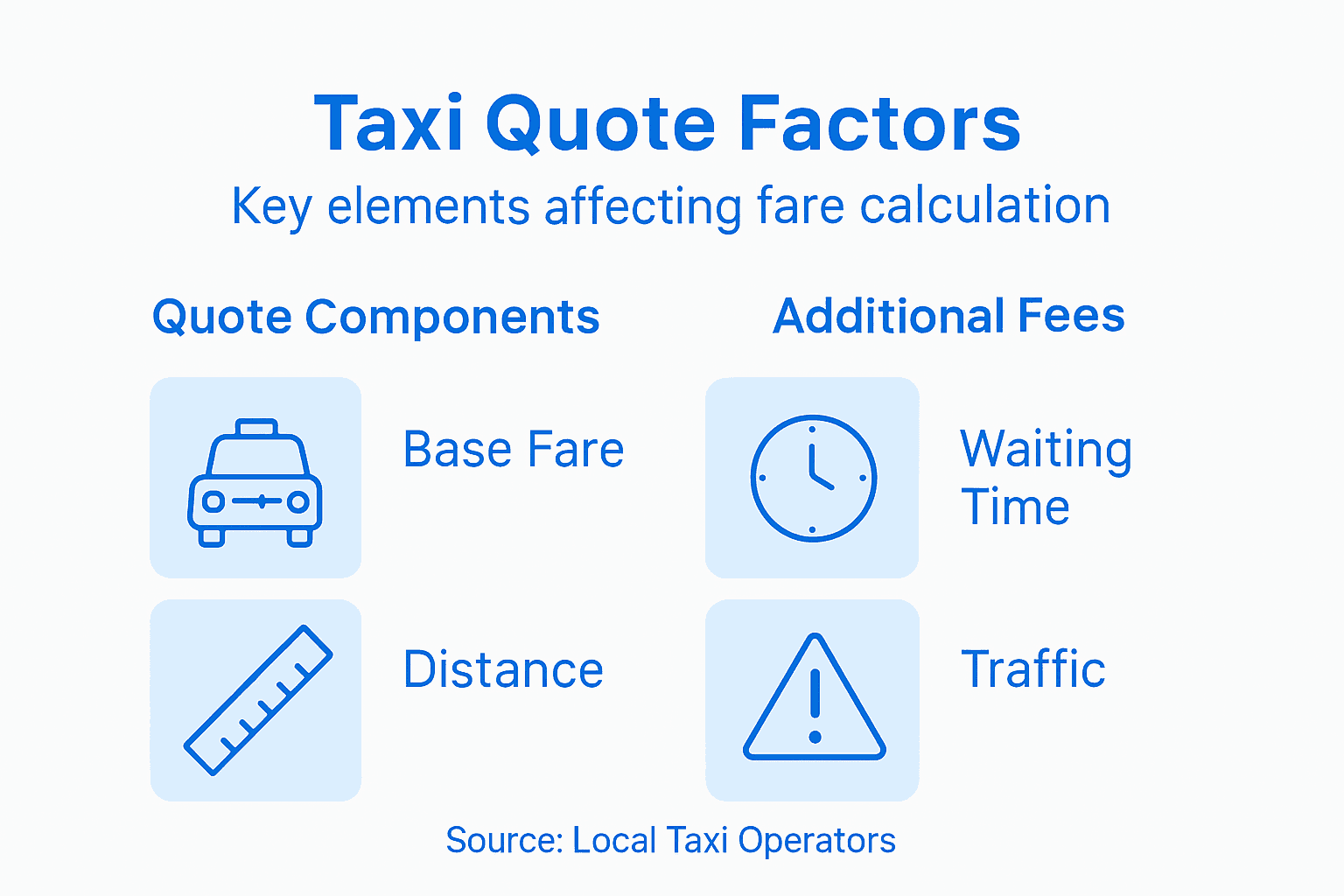
A taxi quote is the estimated price a passenger receives for a transportation service before their journey begins. Understanding these quotes requires navigating a complex landscape of pricing factors and potential variables that can significantly impact the final fare. Unlike simplified assumptions, taxi fare calculations involve multiple intricate components beyond simple distance measurements.
Taxi quotes typically encompass several essential pricing elements:
- Base fare: The initial charge for hiring the vehicle
- Distance rate: Cost calculated per mile or kilometre travelled
- Waiting time charges: Additional fees for periods when the vehicle is stationary
- Peak surcharges: Higher rates during busy hours or high-demand periods
- Additional service fees: Potential extras for luggage, multiple passengers, or special requests
Common misconceptions about taxi quotes often arise from assumptions about pricing transparency and predictability. Many passengers erroneously believe that quotes represent fixed prices, when in reality, fare structures can fluctuate based on numerous dynamic factors. Traffic conditions, route complexity, time of day, and local regulatory environments can all influence the final charge.
Pro tip: Always request a detailed breakdown of potential charges and ask about any additional fees before confirming your taxi booking to avoid unexpected expenses.
How Taxi Quotes Are Calculated
Taxi quote calculations are a sophisticated process involving multiple precise components that determine the final fare. Taxi meter devices play a crucial role in transforming raw journey data into an accurate pricing structure, integrating complex computational algorithms that go far beyond simple distance measurement.
The standard taxi quote calculation typically involves several key pricing elements:
- Base fare: Initial charge applied when the journey begins
- Distance rate: Charge calculated per mile or kilometre travelled
- Time-based charges: Additional fees for duration of journey or waiting periods
- Peak hour surcharges: Elevated rates during high-demand time windows
- Location-specific adjustments: Variable pricing based on specific routes or zones
Modern taxi quote systems employ advanced technologies to ensure precise fare computation. Fare calculation methods now incorporate sophisticated GPS tracking, real-time traffic monitoring, and digital payment integration to provide passengers with increasingly transparent and accurate pricing estimates. These technologies allow for dynamic pricing that reflects current traffic conditions, route complexity, and localised demand patterns.

Understanding the intricate mechanisms behind taxi quote calculations empowers passengers to make more informed transportation choices. By recognising the various factors influencing pricing, travellers can better anticipate potential costs and select the most appropriate transportation option for their specific needs.
Pro tip: Request a detailed fare breakdown before confirming your taxi journey to ensure complete transparency and avoid unexpected charges.
Fixed Fares vs Metered Pricing Explained
Taxi pricing strategies fundamentally diverge into two primary models: fixed fares and metered pricing. Pricing structures represent distinct approaches to calculating transportation costs, each with unique advantages and potential drawbacks for passengers and service providers.
Key differences between fixed fares and metered pricing include:
-
Fixed Fare Characteristics:
- Predetermined total price
- Agreed before journey begins
- Predictable cost for passengers
- Less responsive to actual journey conditions
-
Metered Pricing Characteristics:
- Dynamic calculation based on distance
- Real-time fare adjustments
- Reflects actual service complexity
- Potentially variable final cost
Taxi fare calculation methods reveal nuanced trade-offs between these pricing models. Fixed fares offer passengers certainty and simplicity, eliminating unexpected charges. Conversely, metered pricing provides a more granular representation of actual service costs, accounting for variables like traffic conditions, route complexity, and precise travel time.
Here’s a concise comparison of fixed fares versus metered pricing in taxi services:
| Aspect | Fixed Fare | Metered Pricing |
|---|---|---|
| Cost Predictability | Always known before travel | Only known at journey end |
| Responsiveness to Traffic | Unchanged by delays | Increases with congestion |
| Suitable For | Long or known routes | Unpredictable or short trips |
| Risk of Overcharge | Lower for agreed routes | Higher if route is circuitous |
Understanding these pricing mechanisms empowers passengers to make informed transportation choices, selecting the most appropriate fare structure for their specific journey requirements and budgetary considerations.
Pro tip: Always clarify the pricing method and request a fare estimate before confirming your taxi journey to avoid unexpected financial surprises.
Booking Methods: Online, Apps, and Calls
Taxi booking technologies have dramatically transformed passenger transportation, offering multiple convenient channels for reserving rides. Taxi booking platforms now provide passengers with unprecedented flexibility in how they arrange transportation, catering to diverse technological preferences and accessibility needs.
Modern taxi booking methods can be categorised into three primary channels:
-
Traditional Phone Booking:
- Direct communication with dispatch centre
- Ideal for passengers without digital devices
- Personalised service for complex requirements
- Suitable for older demographic groups
-
Online Web Booking:
- Desktop and mobile website reservations
- Instant quote generation
- Ability to compare pricing options
- Convenient for advance planning
-
Mobile Application Booking:
- Real-time GPS tracking
- Immediate driver allocation
- Integrated payment systems
- Location-based service matching
App-based taxi services have revolutionised transportation by introducing digital efficiency and transparency. These platforms connect passengers and drivers through sophisticated algorithms, reducing waiting times and providing comprehensive journey information that traditional booking methods cannot match.
Understanding the strengths of each booking method enables passengers to select the most appropriate channel based on their specific requirements, technological comfort, and immediate transportation needs.
Reviewing booking methods can help match personal needs to the right option:
| Booking Method | Ideal User | Key Advantage |
|---|---|---|
| Phone Call | Non-digital users | Human assistance available |
| Website | Planners, price checkers | Easy comparison of quotes |
| Mobile App | Tech-savvy, frequent users | Instant tracking and payment |
Pro tip: Compare multiple booking methods and choose the one that best matches your personal comfort level and immediate transportation requirements.
Cost Factors and What Affects Your Quote
Taxi quote pricing represents a complex interplay of multiple dynamic variables that collectively determine the final transportation cost. Transport pricing mechanisms involve intricate calculations that go far beyond simple distance measurements, considering numerous contextual and operational factors.
Key cost factors influencing taxi quotes include:
-
Journey-Based Elements:
- Distance traveled
- Total journey time
- Route complexity
- Traffic congestion levels
-
Operational Cost Factors:
- Vehicle type and category
- Fuel prices
- Driver wages
- Vehicle maintenance expenses
-
External Pricing Influences:
- Peak hour surcharges
- Regional regulatory requirements
- Local market competition
- Special event pricing
Transport cost conditions reveal that taxi pricing is not simply a straightforward calculation but a nuanced process reflecting broader economic and infrastructural dynamics. Geographic location, vehicle operating efficiency, and local transportation regulations significantly contribute to quote variability.
Passengers can better understand potential fare variations by recognising these multifaceted pricing components, enabling more informed transportation decision-making and realistic budgetary expectations.
Pro tip: Request a comprehensive quote breakdown to understand exactly how different factors contribute to your final taxi fare.
Risks, Pitfalls, and How to Avoid Surprises
Taxi services involve inherent complexities that can potentially expose passengers to unexpected financial and service-related risks. Taxi service risks encompass a broad spectrum of challenges ranging from pricing uncertainties to potential service inconsistencies that can significantly impact traveller experiences.
Common risks passengers might encounter include:
-
Pricing Risks:
- Sudden surge pricing
- Hidden additional charges
- Unpredictable fare fluctuations
- Lack of transparent pricing mechanisms
-
Service-Related Risks:
- Driver reliability issues
- Route deviation
- Potential safety concerns
- Communication breakdowns
-
Technological Risks:
- App malfunction
- GPS tracking errors
- Payment system glitches
- Data privacy vulnerabilities
Market power imbalances in taxi services can create additional complications, where passengers might face limited recourse against unfair pricing or substandard service. Understanding these potential pitfalls enables travellers to make more informed decisions and implement protective strategies.
Mitigating risks requires a proactive approach, including researching service providers, understanding pricing structures, and maintaining clear communication throughout the journey.
Pro tip: Always request a detailed fare estimate and confirm all potential charges before starting your taxi journey to prevent unexpected financial surprises.
Take Control of Your Taxi Journey with Confidence
Understanding the many factors that influence a taxi quote can feel overwhelming. From unexpected surcharges to different pricing models, the potential for surprise costs can make booking a taxi stressful. If you want clarity on your fare and a trusted, professional service in Edinburgh, Capital Cars Scotland offers transparent pricing and reliable private hire options designed to suit your needs. With our range of vehicles including saloons, estates, and executive cars, you can choose the perfect ride at a clear, agreed price.
Explore our easy booking system via phone, email, or online and benefit from special offers to make your journey both affordable and safe. Don’t let hidden fees or last-minute fare changes catch you off guard. Visit our Uncategorised Archives – Capital Cars for helpful tips, stay informed, and book your next ride confidently. Start your hassle-free travel experience now at Capital Cars Scotland.
Frequently Asked Questions
What are the key components of a taxi quote?
Taxi quotes typically include several essential pricing elements such as the base fare, distance rate, waiting time charges, peak surcharges, and additional service fees for luggage or extra passengers.
How do taxi quotes differ between fixed fares and metered pricing?
Fixed fares offer a predetermined total price agreed upon before the journey, providing predictability for passengers. In contrast, metered pricing dynamically adjusts based on distance and time, reflecting actual service complexity, potentially leading to variable final costs.
What factors can affect the final taxi quote during a journey?
The final taxi quote can be influenced by various factors including the distance travelled, total journey time, traffic congestion levels, vehicle type, fuel prices, peak hour surcharges, and regional regulatory requirements.
What risks should passengers be aware of when booking a taxi?
Passengers should be cautious of pricing risks such as sudden surge pricing and hidden charges, as well as service-related risks including driver reliability and potential safety concerns. It’s essential to understand these risks to make informed decisions and avoid unexpected surprises.